Sunday, February 17, 2013

Anton Beder project

I generally like most stringed instruments, even finicky ones like my problem child banjo. So, recently when I got an interesting old Anton Beder in need of some repairs I was excited for the project and prospect of another violin to play with.

It needed new strings, a new cord on the tail piece, some clean up if the finish and an adjustment to the sound peg. It also needed a new bow as the old one was shredded and I've yet to learn how to re-hair them.
I added a fourth fine tuner to make it easier with my admittedly limited skills. I have a newer unlabeled but presumably Chinese violin,  a US made model sold by Sears that has been in the family since the 1930's and another from the late 1800's. They've all been OK to tune but the Beder is proving to be a challenge for me, even if it sounds nice out of tune. It's a 3/4 which may be why I'm having a hard time with it but again, it's probably me that's the problem and not the violin.

This is the third violin I've repaired and sounds as good as the others excepting the oldest one that did ironically sound the best, though I'm blaming that on coincidence rather than some magic of age or quality. It's also nice to have a German made instrument in the mix assuming it's not a fake. If it is a fake it's at least not a new one as the rosin in the case is old enough to have retailed for $.45 and simply looking at it, the patina and finish is consistent with instruments from the 1930's and 40's. It was a fun find but will most likely soon find a new home with an aspiring young violinist.

Friday, February 15, 2013

1970 Schwinn Breeze

After a fair amount of scrubbing, polishing, rerouting cables and removing copious amounts of mystery wire, this fun little Schwinn made its maiden voyage down the hills to Chrissy Field. Manufactured in August of 1970, it rides as well as many modern counterparts and moves along nicely on 26" wheels with its venerable Sturmey Archer three speed hub shifter. It has some interesting quirks like the 26 inch wheels that take 597's rather than the typical 590 tires and believe me 7mm makes a big difference. It's also all in American nut and bolt sizes so if you ride mainly Japanese bikes or even just modern bikes in general you may need a couple new wrenches to work on these old Chicago bikes. I've had visions of English roadster style riding since the last couple were stolen. This is a great budget move in that direction. I even picked up a wooden clam crate for the back, similar but somehow seems more appropriate than a wine crate and more useful than the bare rack for my needs.

Coming at it with low expectations probably helped but its a fun bike to ride now that it has new brake pads and actually slows down when you squeeze the levers. I'll at least be hanging on to it into the summer or until I find something nicer or at least a little more solid. It's an adequate bicycle but being a budget bikes for the ladies in 1970, it's not exactly built to handle a heavier male rider or the demands of getting around San Francisco. Either way it's a classic I'd probably hang on to if I wasn't at capacity for bike storage. It's looking better with each cleaning but it will keep much of it's well earned patina.


Chain guard and stylish crank
Complete with vintage rack and  comfortable saddle
A decent looking bike

Thursday, February 7, 2013

Of Archaeology and Marshalltown trowels

I recently started applying for archaeology jobs again. Aside from just missing it, archaeology was my first real career path after blacksmithing and my favorite Marshalltown trowel that's been with me since my first field school was one of the random things I brought with me when I moved west. It's long since been put back in storage safe but not easily accessible. After writing a few cover letters for archaeology work I started to wonder if I could find another drop forged trowel as the last time I knew, Marshalltown had stopped making them. Low and behold they are back in production, looks like for at least a little while now and have added an "archaeology sheath" to the offerings. I wouldn't have thought we bought enough of them to warrant that kind of love but I'll welcome it. After, I don't know how many, hours digging very precise holes, Marshalltown trowels were the only ones that lasted. I was part of more than one foray into town searching out trowels in flea markets and old hardware stores that might still stock one or two.

Fried smelt


Thawed smelt on ice
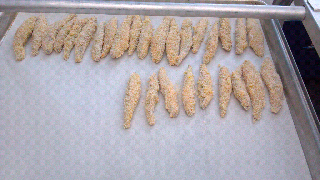
Not long ago I had a chance to go lend a hand with the Forage SF Underground Market. It's an event that was happening on a fairly regular basis, though this one would be the last. I Had shown up to tend bar and help that way but Chef Larry was kind enough to have me outside working the fried smelt pop up. Smelt are a fun little fresh water fish similar to sardines or herring. Often used as bait fish, they make for a great meal battered and deep fried whole. The humorous nickname, "fries with eyes" is often heard near a fryer full of smelt. 

ready for the fryer
I ate them too fast to get a better photo
Smelt typically run once a year and fishermen simply go out and net them. You can haul a lot of the little things out of a lake in one go and freeze what you don't cook up on the spot. This batch was from a lake in Ontario and had been shipped in frozen. This might not be ideal for other dishes but as they are battered and fried, it doesn't rob them of much. 
To make them we washed and gently dried them, dredged them in a mix of flour and paprika. Next they went into an egg wash before being dredged in panko. You could use something other than these lovely little Japanese bread crumbs but they really are excellent. They were paired with caper aioli, a nice alternative to tarter sauce. 

These can also be prepared in a "deep" skillet, like a typical iron skillet, with whatever oil is handy. They'd be nice fried in duck fat! 


Thursday, January 31, 2013

Le Tour

Right after I got it, tires flat and not yet ridable.
Haven't blogged in a while, not really much since I was in a near fatal van on bicycle accident. It wasn't so awesome but both I and my favorite green bicycle survived(after a little rebuilding on both counts). I've got a backlog of fun things and projects to write up and I'm carving out time to do so.

I'm not often one for kitsch but this is a pretty awesome ad. 
One fun project has been the unearthing and repair, not so much restoration, of a 1974 Schwinn Le Tour road bike. I picked it up at a garage sale for next to nothing and put in a lot of elbow grease along with some bike grease and hours to end up with a great looking bike that is fun to ride and more suitable for longer rides than my Globe, more on that as well. My original plan was to use it for randonneuring but it's become more of a special occasion and weekend bike for me so my quest for a randonneur worthy bike continues. 

After it's first(and my first since the accident) bridge crossing.
It was pretty grubby when I got it after sitting in a garage in Russian Hill since 1976. The tires had practically melted over the years but other than that and some rust here and there it was/is about as stock and complete an example of this iconic ride as you'll ever see. I've replaced the seat and swapped out the wheels from another vintage bike but it's essentially as purchased back in the 70's. Thanks to this handy site for Schwinn fans I was able to pinpoint exactly what I had found. 

So far it's made a few rides across the Golden Gate Bridge up to Muir woods and around Marin as well as making appearances in San Francisco from time to time. I had planned to really change out a lot of things and update the bike but the more I ride it the more I like it just the way it is and I may do a randonneur race on it yet. Definitely one of those bikes that just sort of grows on you. 

Friday, January 25, 2013

Fingerless mittens

I tried a couple different styles, including knitting on double pointed needles but settled on a simple method using straight needles where you knit them flat and then stitch them up. It's easy, knits up fast and makes for pretty good fingerless mittens.

You can use Number 8 or 9 needles. Cast on 28-30 stitches of worsted weight yarn and knit two or three inches of ribbing. I like the look of only using knit stitches but alternating knits and purls would work just as well. When you have six inches or so of the body knit another inch or two of ribbing and bind off.

To stitch them up, fit the glove to your hand, starting at the finger end works best for me. Use a tapestry needle or the big ones yo find in knit shops and do a simple whip stitch down to where you'd like the thumb to be. I weave the yarn through the knitting to get it around the thumb opening and then, again fitting it to your hand, start stitching again and go down to the wrist. Simple as that. You can vary the stitches, make them fair isle, whatever you'd like.

Mine are working well for the mild, but still often cold, weather we have here in the San Francisco area. As with most knit gloves and mittens they wear quickly on a bicycle. I'm planning to stitch leather palms on a pair soon and see how that helps with the bicycle wear and tear.

Thursday, January 24, 2013

Cracker Barrel Banjo

A year or so ago I was visiting family and went to Cracker Barrel. I'd been looking for a small banjo, something I wouldn't cry over if anything happened to it dragging it around camping or to social gatherings. I'd not expected to find it in the gift shop while we were at brunch but low and behold there it was. A "junior banjo guitar" aka a short neck five sting banjo. It may also have been modeled on a banjeaurine an instrument I haven't seen too many of. It was about $40 on sale and definitely a toy. Out of the box it was almost playable, with steal stings and a plastic head. Worth noting is that it takes a "no collar" head, something that isn't super common but not terribly hard to find online if you know what to call it. The head that comes with it is too soft and as it stretches, while you are playing it, the banjo goes out of tune in a hurry. Mind you with a new bridge and head it plays ok. Really, I like my Washburn and will almost always grab that first but people have been cobbling together banjos out of everything from gas and oil cans to gourds and cigar boxes since the instruments emerged. No, it doesn't sound "great" and no it isn't nice but there is a certain charm in playing through the challenges. I out a calf skin head on mine and used a nicer bridge and it's almost decent.

What it is mostly is affordable but it's not a good beginner banjo. I use mine to practice rolls and just play around when I'm by myself with no one to annoy. Even at that, I'm a hare's breath away from putting a metal or birch top on it due to it's inability to be properly adjusted. It's a toss up really, either I modify this thing a bit more or hang it on the wall and look at it while I build a gas can banjo or some other fun thing that is vaguely more playable. There are also lots of nice banjo's and banjo ukulele's out there for a couple hundred bucks. This is far from the only low end of the market option.

Bottom line though, it's a fun thing to have around and as long as it isn't your only banjo, you might as well grab one next time you are having hash brown casserole at Cracker Barrel. I did look on the website but there were very few instruments and no banjo but my parents say they are still selling them in the gift shop at the one near them in northern Indiana.